





 Portuguese
  English
  Spanish
  3 min of reading
  0 comments


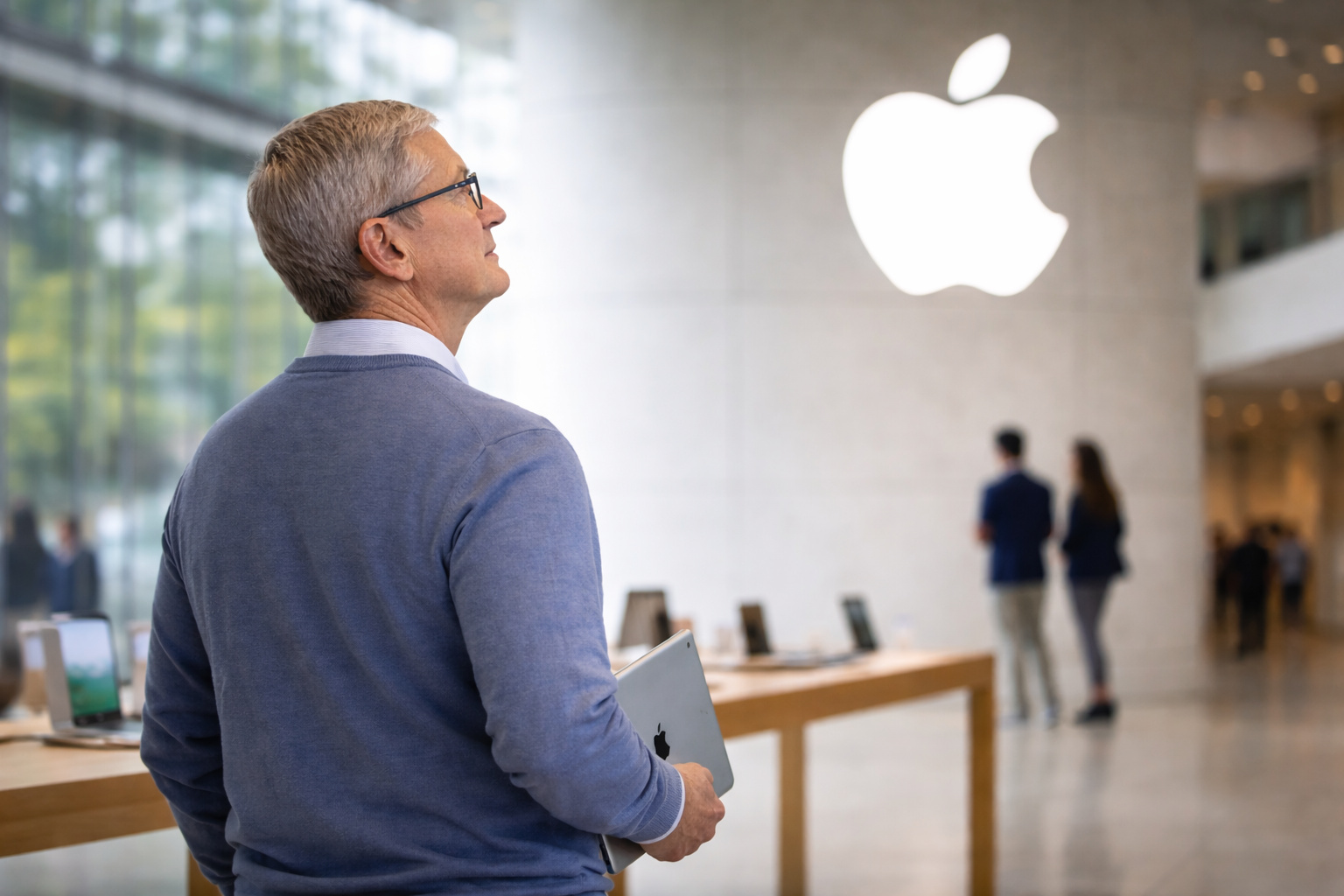
Apple’s leadership change redefines global leadership and highlights billion-dollar figures, new products, and continuity of the company’s vision
Apple announced, on April 20, 2026, the departure of Tim Cook from the CEO position, ending a cycle of almost 15 years at the helm of the company.
In addition, John Ternus, current Senior Vice President of Hardware Engineering, will take over starting September 1, 2026.
At the same time, Cook will serve as Executive Chairman of the Board of Directors, maintaining direct influence over the company’s strategic decisions.
-
Anvisa clears Ypê factory after sanitary inspection, but maintains alert on old batches that still cannot return to the market

-
The new NR-1 has arrived and promises to impact companies in Brazil: mental health, impossible goals, and harassment are now firmly in the sights of labor inspection.
-
Artificial Intelligence in CRM: The Practical Guide for B2B Sales in 2026
-
Heineken surprises the market by launching a beer with only 97 calories, gluten-free, and specially created to win over a new consumer profile in Brazil.


According to an official statement from Apple Inc., the transition marks the beginning of a new phase in the leadership of the global tech giant.
Historic growth under Tim Cook’s leadership
During his tenure, which began in 2011, Apple showed significant expansion across various indicators.
According to data released by the company itself, market value jumped from approximately US$ 350 billion to US$ 4 trillion.
In addition, annual revenue grew from US$ 108 billion in 2011 to over US$ 416 billion in 2025.
Concurrently, the company expanded its global presence, reaching over 200 countries and territories.
At the same time, Apple began operating over 500 physical stores, while its active base surpassed 2.5 billion devices.
Furthermore, the number of employees grew by over 100,000 people, strengthening the company’s global structure.
Products and services gain prominence in the Cook era
During this period, Cook oversaw the launch of new strategic products.
Key highlights include the Apple Watch, AirPods, and Apple Vision Pro.
In addition, Apple strengthened its digital ecosystem with services such as iCloud, Apple Pay, Apple TV, and Apple Music.
As a result, the services segment surpassed US$ 100 billion, consolidating itself as one of the company’s pillars.
Concurrently, the company advanced in creating its own chips, enhancing performance and energy efficiency in its devices.
John Ternus takes over with a focus on continuity and innovation
Upon taking office, Ternus stated he is optimistic about the company’s future and highlighted the commitment to Apple’s historical values.
According to the company, he joined in 2001, initially working in product design.
Later, in 2013, he became Vice President of Hardware Engineering.
Then, in 2021, he joined the executive team as Senior Vice President.

Career marked by hardware innovation
Throughout his career, Ternus led the development of several relevant products.
Among them, highlights include the iPad, AirPods, and multiple generations of iPhone, Mac, and Apple Watch.
Furthermore, he played an important role in the evolution of the Mac line, which, according to Apple, reached record levels of performance and global popularity.
Recently, his team participated in the launch of the MacBook Neo, expanding access to the platform.
At the same time, he contributed to the new generation of iPhones, including the iPhone 17 Pro, Pro Max, iPhone Air, and iPhone 17.
Advances in materials and sustainability
Under his leadership, the company implemented significant improvements in materials and engineering.
Among them, highlights include the use of recycled aluminum and the application of 3D-printed titanium in the Apple Watch Ultra 3.
Additionally, improvements in device durability and reparability were introduced.
As a result, these advancements contributed to reducing the company’s carbon footprint and increasing product lifespan.
Before Apple, Ternus worked as a mechanical engineer at Virtual Research Systems.
He also holds a degree in Mechanical Engineering from the University of Pennsylvania.
Given this transition officially announced by Apple in April 2026, the company begins a new cycle — but will John Ternus be able to maintain the pace of innovation and growth built over recent years?








Be the first to react!